STANDARDS
Match it to the sport
BS EN 1078 covers helmets for cycling, skateboards and roller skates. Skiing and snowboarding have their own standard, BS EN 1077, which adds a penetration test.
Which standard?
THE KIT THAT GUARDS YOUR HEAD
2 FINGERS above the eyebrows
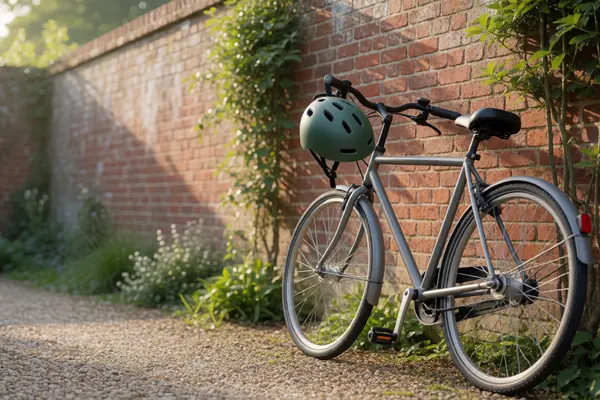
AI-generated image, not a photograph of a real person or place.
A helmet is built to crumple so your head does not.
That only works if it was tested for your sport, sits low on the forehead with the straps snug, and has not already used itself up in an earlier fall.
THE SHORT ANSWER
Standards set how a helmet is tested.
Fit and condition decide whether it can do its job.
STANDARDS
BS EN 1078 covers helmets for cycling, skateboards and roller skates. Skiing and snowboarding have their own standard, BS EN 1077, which adds a penetration test.
Which standard?FIT
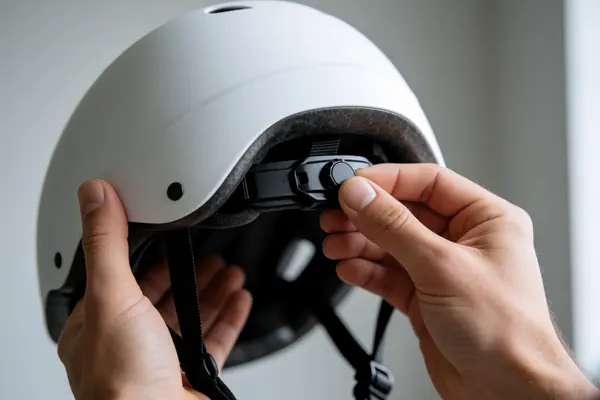
Cycling UK's checks: brim no more than a couple of fingers above the eyebrows, side straps meeting in a V under the earlobes, chin strap loose enough to yawn.
Fit it nowREPLACE
BSI says a helmet that takes a severe blow needs replacing even if the damage is not apparent, because its structure may be damaged as it absorbs the impact.
Check yours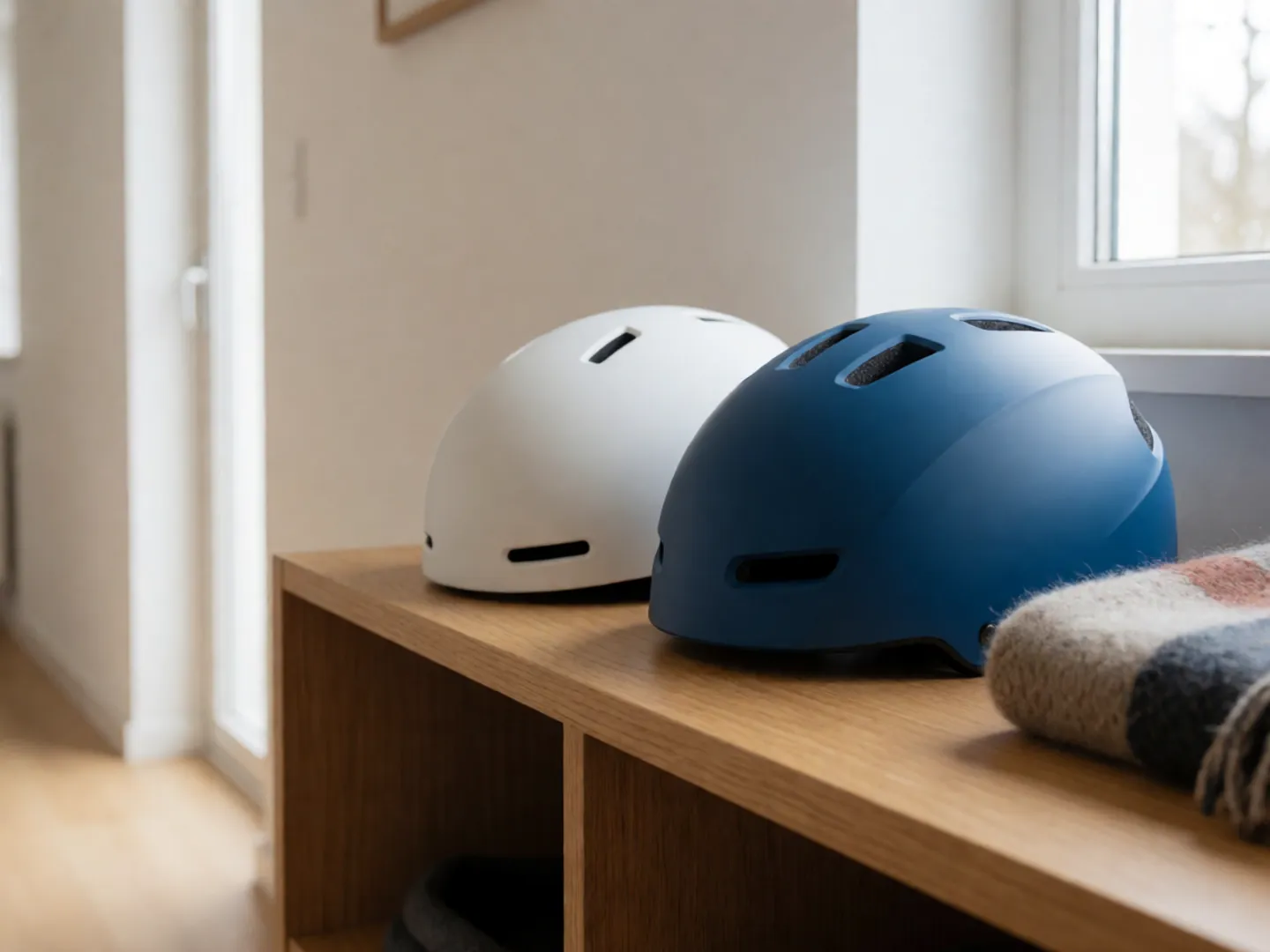
FOUR STEPS TO A GOOD FIT
These checks come from Cycling UK's fitting advice for cycle helmets. Helmets for other sports come with their own fitting instructions from the maker.
Hold a tape level around your head, above the ears and eyebrows. Sizes are given as a range in centimetres, so try on the size that covers yours.
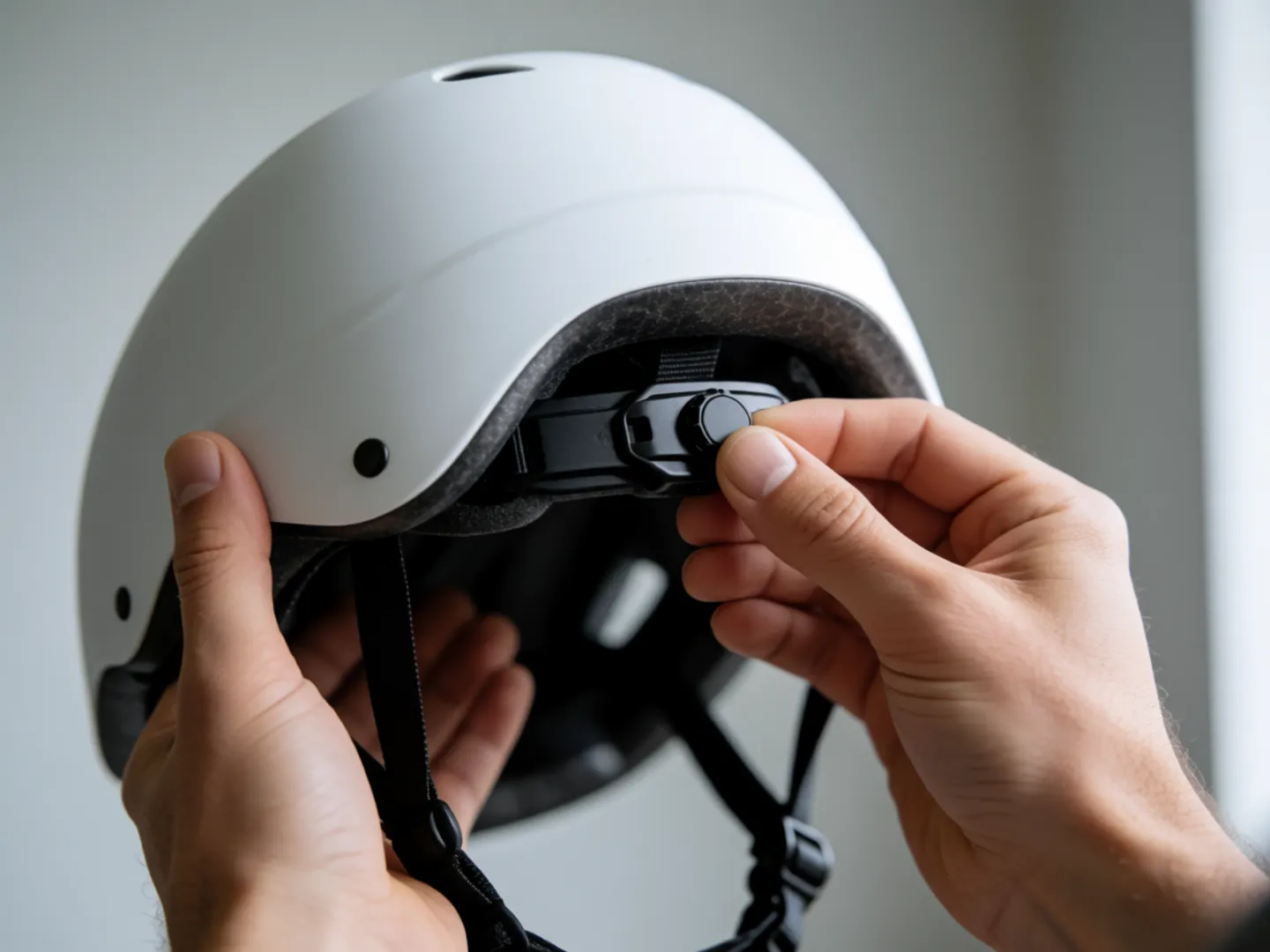
Tighten the rear cradle until snug but comfortable. Shake your head and bend over: with the chin strap undone it should still stay on.
The brim should be no more than a couple of fingers' width above your eyebrows. If your forehead is showing, it is unprotected.
Side straps meet in a V under the earlobes. The chin strap should let you yawn but take only a finger or two underneath.
TWO NUMBERS WORTH KNOWING
One figure from a large review of cycling crashes,
one on how long a helmet is meant to last.
≈ 51% lower
Odds of head injury with a helmet, in a crash or fall
A 2017 review in the International Journal of Epidemiology pooled 40 studies of over 64,000 injured cyclists. Helmet use was linked to an odds ratio of 0.49 for head injury and 0.31 for serious head injury.
HEAD INJURY · META-ANALYSIS
3–5years
Suggested use-life of a cycle helmet
Cycling UK says manufacturers suggest three to five years because sweat, sunlight and general wear take their toll, and that a helmet should be replaced after a fall in which it is hit.
LIFESPAN · CYCLING UK
The same review found no clear link between helmet use and neck injury, and the reduction was greater for serious or fatal head injury. BSI notes that a helmet cannot always prevent death or long-term disability.
A QUICK HELMET CHECK
Pick what is going on with your helmet to see what the guidance says. The bar shows how urgent the fix is.
Based on Cycling UK's helmet fitting and care advice and BSI's summary of BS EN 1078. Always follow the maker's own instructions too.
ONE SPORT, ONE STANDARD
Each European helmet standard is written for a particular activity. BS EN 1078 covers pedal cyclists, skateboarders and roller skaters and tests construction, field of vision, shock absorption, the chin strap and fastening, and markings.
BS EN 1077 covers alpine skiers and snowboarders, sets two classes of protection, A and B, and adds a resistance-to-penetration test. Climbing and horse riding have standards of their own as well.
In conversation
Rule 59 of the Highway Code says you should wear a helmet that conforms to current regulations, is the correct size and is securely fastened. Legal requirements in the Code are marked MUST; advisory 'should' rules are not offences in themselves.
The standards are different. BS EN 1078 covers cycling, skateboards and roller skates, while BS EN 1077 covers alpine skiing and snowboarding and includes a resistance-to-penetration test. Look for the standard for your activity.
After any fall in which it is hit, even with no visible damage. Otherwise Cycling UK says makers suggest a use-life of three to five years.
A 2017 meta-analysis of 40 studies found helmet use in a crash or fall was linked to lower odds of head injury (odds ratio 0.49), serious head injury (0.31) and fatal head injury (0.35).
Cycling UK says a cycling cap or stretchy snood fits under most helmets, but you will need to readjust the rear cradle and probably the chin strap.
Each figure on this page comes from the sources below.
ABOUT THIS NAME
activetechgear.com is part of the DoodleSale portfolio. It isn't in an auction right now, but you can ask about leasing it.